

A change readiness assessment is the step most failed change projects skipped. Organisations regularly announce a new system, structure or process, then wonder why adoption stalls often because no one checked, before launch, whether the organisation actually had the leadership alignment, capacity and trust needed to absorb the change. This guide explains what a change readiness assessment actually measures, the warning signs that an organisation isn’t ready, and a practical framework you can use before your next project kicks off.
Whether you’re planning a system rollout, restructure, or process change, running a proper change readiness assessment first is one of the highest-leverage steps covered in our Change Management Foundation course.
What Is a Change Readiness Assessment?
A change readiness assessment is a structured evaluation of whether an organisation, team or individual group of employees is genuinely prepared to absorb an upcoming change. It typically combines surveys, interviews, and structured stakeholder analysis to measure factors like leadership alignment, past change experience, available capacity, and trust in leadership — well before a project reaches implementation.
Why Skipping a Readiness Assessment Is So Costly
Without a readiness assessment, project teams often discover resistance, change fatigue, or capacity problems only after go-live, when they’re far more expensive and disruptive to address. A readiness assessment surfaces these risks early enough to adjust the project plan, timeline, or communication approach before they derail adoption.
Warning Signs Your Organisation Isn’t Ready for Change
- Senior leaders give inconsistent explanations for why the change is happening
- Staff are already stretched thin by other active projects or restructures
- Previous changes were poorly communicated or abandoned midway
- Middle managers are unclear on their role in supporting the change
- There’s no realistic budget or timeline for training and post-launch support
The Six Dimensions a Change Readiness Assessment Should Measure
| Dimension | What to Assess |
| Leadership alignment | Do senior leaders agree on the reason for the change and visibly support it, or are messages mixed? |
| History of change | Have previous changes succeeded or failed, and how does that history shape current staff attitudes? |
| Change capacity | Is the organisation already stretched by other initiatives, or genuinely able to take this on now? |
| Culture and trust | Do employees generally trust leadership communication, or is scepticism likely to slow adoption? |
| Manager capability | Are frontline managers equipped and willing to reinforce the change with their teams? |
| Resources and support | Is there a realistic budget, timeline and dedicated resourcing for training and support? |
How to Run a Practical Change Readiness Assessment

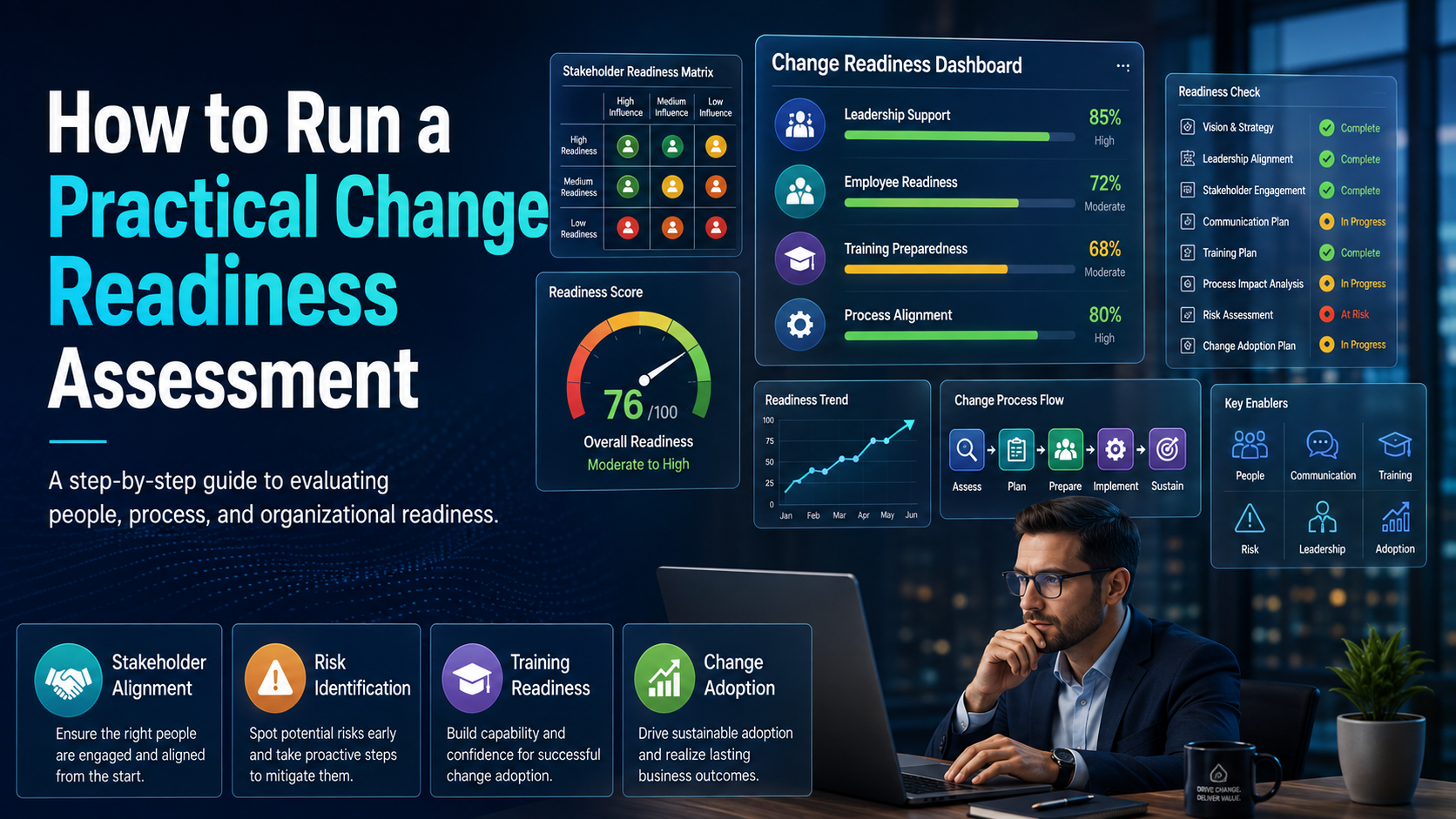
1. Define What ‘Ready’ Looks Like for This Specific Change
Readiness isn’t generic — it depends on the size, complexity and audience of the specific change. Define clear readiness criteria before you start assessing.
2. Gather Data From Multiple Sources
Combine short pulse surveys, structured leader and manager interviews, and review of past change outcomes, rather than relying on a single data source or one leader’s opinion.
3. Score Readiness Across Each Dimension
Use a simple scoring scale (for example, 1 to 5) across leadership alignment, capacity, culture, manager capability and resourcing, so gaps are visible and comparable rather than anecdotal.
4. Share Findings With Sponsors Honestly
A readiness assessment only creates value if the results are shared candidly with project sponsors, including uncomfortable findings, so the plan can be adjusted before launch.
5. Build an Action Plan for Every Gap Identified
Every low-scoring dimension needs a specific mitigation — additional sponsor communication, adjusted timelines, or extra manager coaching — not just a note in a report that nobody actions.
Common Mistakes When Assessing Change Readiness
- Treating the assessment as a formality instead of genuinely using the results to adjust the plan
- Only surveying leadership and skipping frontline staff, where resistance often actually lives
- Running the assessment too late to meaningfully change the project approach
- Using a generic, one-size-fits-all questionnaire instead of tailoring it to the specific change
Change Readiness Assessment vs Stakeholder Analysis
These two tools are related but different. Stakeholder analysis maps who is affected by a change and how much influence or interest they have. A change readiness assessment goes a step further, measuring the organisation’s actual capacity and appetite to absorb the change itself. Most well-run change projects use both together, alongside models like ADKAR to track individual-level readiness as the project progresses.
Build the Skills to Run Change Readiness Assessments
Running a credible change readiness assessment is a core skill taught in structured change management training, not something most professionals pick up by trial and error on a live project. Our Change Management Foundation course covers stakeholder analysis and organisational readiness fundamentals, while our Change Management Practitioner course builds toward applying these tools on real, complex projects. If you’re deciding between certification paths, our comparison of Prosci vs APMG change management and our guide to Change Management Foundation vs Practitioner are useful next steps.
Build Your Change Management Career in Australia
We deliver instructor-led change management courses from local centres in Melbourne, Sydney, Brisbane, Perth, Adelaide and Canberra, as well as live online nationwide. Read more on our About Us page, browse common questions on our FAQs page, or get in touch to find the right course for your next project.
Frequently Asked Questions
When should a change readiness assessment be conducted?
Ideally early in project planning, well before the implementation phase, so results can genuinely influence the project plan, timeline and communication approach.
Who should be involved in a change readiness assessment?
Senior leaders, frontline managers, and a representative sample of the staff who will actually be affected by the change not leadership alone.
How often should readiness be reassessed during a project?
For longer projects, readiness should be checked at key milestones, not just once at the start, since capacity and sentiment can shift significantly over the life of a project.
What tools are used for a change readiness assessment?
Common tools include pulse surveys, structured interview guides, and scored readiness frameworks the specific tools taught in courses like our Change Management Foundation program.
Conclusion
A change readiness assessment is one of the simplest ways to reduce the risk of a change initiative failing, yet it’s still one of the most commonly skipped steps in Australian organisations. Building this into your project plan early gives sponsors real visibility into risk, and gives your change team time to act on it. Explore our change management courses to build these skills, or browse our change management blog for more practical frameworks and Australian case studies.