
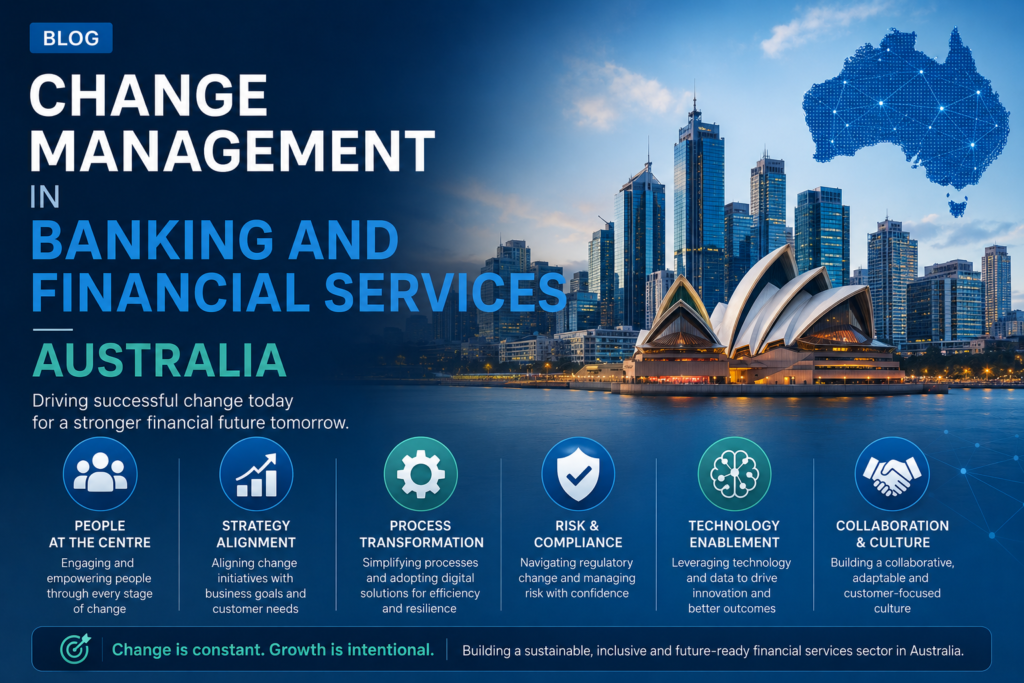
Change management in banking and financial services Australia has become a core leadership capability, not a nice-to-have. Australia’s banking and financial services sector is constantly evolving because of regulatory updates, digital transformation, AI adoption, shifting customer expectations, cyber risk and operational improvement. In its Key Issues Outlook 2026, ASIC identified AI-powered cybercrime, rapid digitalisation, superannuation operational failures and regulatory complexity as major pressures on Australia’s financial system this year. For banks, insurers, superannuation funds, fintechs and other financial service providers, successful change is not just about installing new systems it is about helping people understand, accept and adopt new ways of working.
Want to build practical change management skills for banking, finance or corporate transformation? Explore our Change Management Courses in Melbourne, Sydney, Brisbane, Adelaide and online.
Why Change Management Matters in Australian Banking and Financial Services
Banks and financial organisations operate in a highly regulated, customer-sensitive and technology-driven environment. Any major change a new compliance requirement, a technology rollout, a merger, a restructure or a digital banking update can affect employees, customers, operations and risk controls. This is exactly why change management in banking and financial services Australia has moved from a project add-on to a genuine leadership discipline.
A structured approach typically needs to cover:
- Regulatory compliance changes
- Digital banking transformation
- AI and automation adoption
- Cybersecurity and operational resilience
- Customer experience improvements
- Staff training and adoption
- Process standardisation
- Risk and governance improvement
Australia’s financial sector continues to face pressure from digitalisation, AI transformation and complex regulatory settings, which is why ASIC continues to stress the importance of operational resilience and clear governance across banking and financial services.
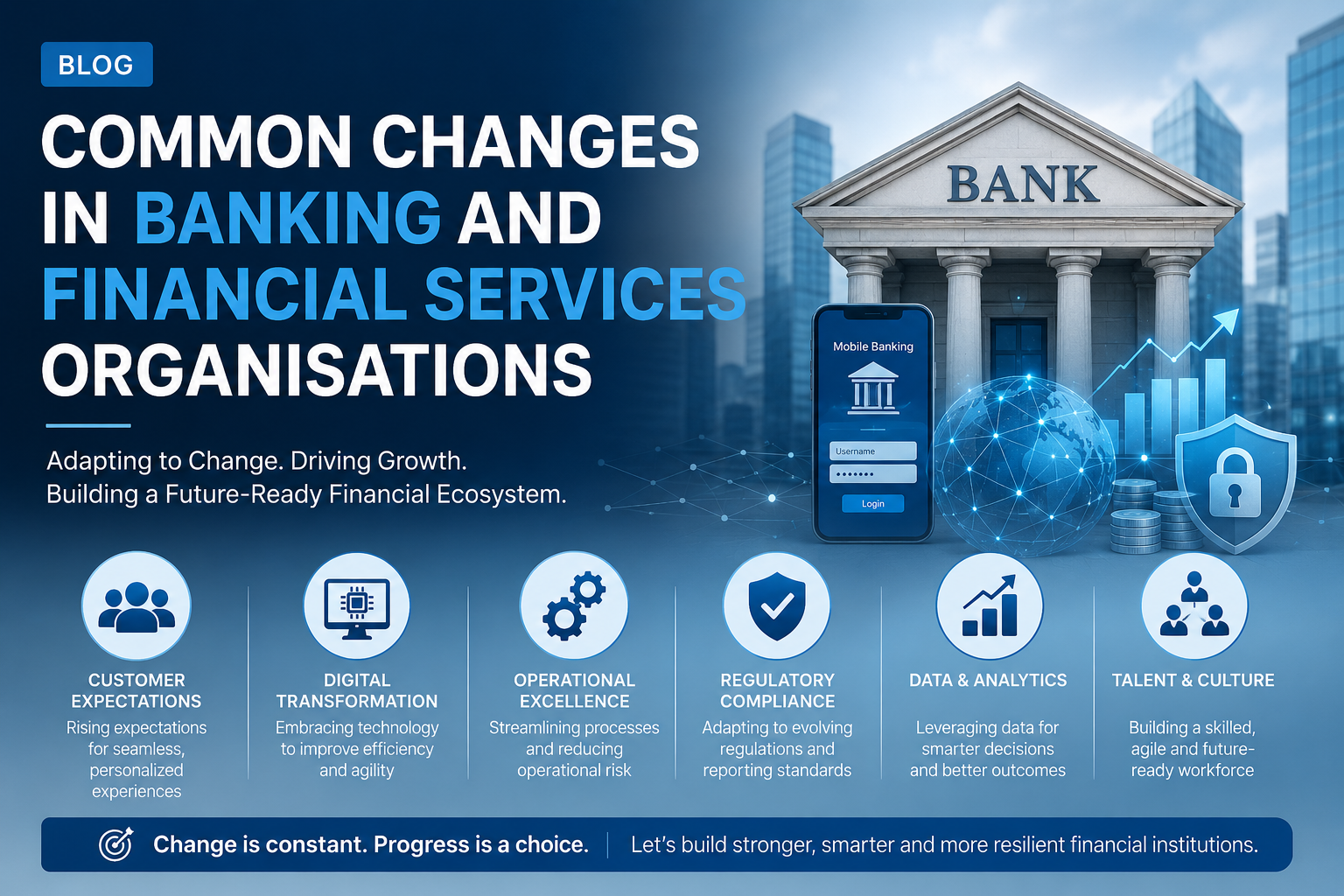
Common Changes in Banking and Financial Services Organisations
1. Regulatory and Compliance Change
Financial services organisations in Australia must respond to changes from regulators such as APRA and ASIC. In June 2026, APRA and ASIC jointly announced proposed changes to streamline parts of the Financial Accountability Regime while maintaining accountability standards. This type of regulatory update usually requires clear communication, updated accountability maps, staff awareness sessions and process adjustments all core parts of change management for financial services teams.
2. Digital Transformation Projects
Banks and financial institutions regularly implement new digital platforms, mobile banking tools, CRM systems, customer portals and internal workflow systems. Without change management, employees may resist new processes or fail to use new systems correctly, which slows down banking transformation Australia-wide.
3. AI and Automation Adoption
AI is transforming financial services in Australia, but it also creates workforce, trust, governance and cyber-risk challenges. ASIC has highlighted rapid advances in AI and AI-powered cybercrime as key issues for the Australian financial system in 2026. Change management helps leaders explain why AI is being introduced, how roles may change and what support employees will receive.
4. Customer Experience Transformation
Banks and financial services firms often introduce new processes to improve customer onboarding, loan approvals, claims handling, complaints management or digital support. Change managers help make sure employees understand and can confidently deliver the new customer journey.
5. Mergers, Restructuring and Operating Model Change
Financial services organisations may restructure teams, merge departments, update reporting lines or change delivery models. These changes can create real uncertainty for staff, so communication and stakeholder engagement become critical to organisational change in banking.
Key Challenges of Change Management in Banking and Finance
Employee Resistance
Employees may feel uncertain about new technology, automation, compliance procedures or role changes, especially where job security feels uncertain.
Regulatory Pressure
Financial organisations must implement changes carefully because errors can affect compliance, reporting, customers and trust raising the stakes for any change program.
Complex Stakeholder Groups
Banking projects usually involve many stakeholders, including executives, compliance teams, risk teams, customer service teams, IT, branch staff, operations and external vendors.
Customer Trust
If change is poorly managed, customers may experience delays, confusion or service disruption, which can quickly erode confidence in a brand.
Legacy Systems
Many financial organisations still run on older systems, which makes technology-led transformation more complicated and slower to deliver.
How Change Management Supports Banking Transformation
1. Clear Communication
Change managers create communication plans so employees understand what is changing, why it matters and how it affects their role.
2. Stakeholder Engagement
They identify key stakeholders, map influence and resistance, and build support across business units before a rollout begins.
3. Training and Capability Building
Training helps employees adopt new systems, compliance processes and customer service workflows with confidence rather than guesswork.
4. Risk Reduction
Structured change management reduces confusion, errors, rework and operational disruption all of which carry a real cost in a regulated industry.
5. Better Adoption
The success of any transformation ultimately depends on whether people actually use the new tools, processes and behaviours, not just whether the system goes live.
Change Management Skills Needed in Banking and Financial Services
Professionals leading change in this sector generally need a blend of the following skills:
- Stakeholder analysis
- Change impact assessment
- Communication planning
- Training and adoption planning
- Resistance management
- Leadership alignment
- Risk awareness
- Process mapping
- Benefits tracking
- Governance and reporting
- Digital transformation understanding
- Emotional intelligence
Change Management in Major Australian Cities
Change Management in Melbourne Banking and Finance
Melbourne has a strong corporate, banking, insurance, superannuation and professional services market. A change management course in Melbourne can help professionals build skills for technology rollouts, compliance change, customer experience transformation and organisational restructuring.
Change Management in Sydney Banking and Finance
Sydney is one of Australia’s biggest financial services hubs. Professionals working in banking, investment, fintech, insurance and consulting can benefit from structured change management training in Sydney to support regulatory change, digital transformation and business transformation projects.
Change Management in Brisbane Banking and Finance
Brisbane’s growing financial services, government and corporate sectors create demand for professionals who can manage change across systems, teams and operations. A change management course in Brisbane can support leaders, project managers, HR teams and business analysts.
Change Management in Adelaide Banking and Finance
Adelaide organisations also need change management capability for digital adoption, compliance projects and workforce transformation. Change management training in Adelaide can help professionals lead smoother transitions and reduce resistance.
Online Change Management Training Across Australia
For professionals outside major cities, or those needing flexibility, online change management training allows learners across Australia to build practical skills without attending classroom sessions.
Who Should Learn Change Management for Banking and Financial Services?
This guide and the training options below are useful for:
- Banking professionals
- Financial services managers
- Project managers
- Business analysts
- HR professionals
- Risk and compliance teams
- Operations managers
- IT transformation teams
- Customer experience managers
- Team leaders
- Fintech professionals
- Superannuation and insurance professionals
Change Management Course for Banking and Financial Services Professionals
A change management course can help banking and finance professionals learn how to plan, communicate and implement change successfully. It can also help professionals manage resistance, engage stakeholders, support adoption and align change initiatives with business goals.
A good course should help you:
- Learn practical change frameworks
- Build stronger stakeholder engagement skills
- Improve communication during transformation
- Support digital and AI adoption
- Reduce resistance across teams
- Manage regulatory and compliance-related change
- Build confidence as a change leader
If you work in banking, finance, insurance, superannuation or business transformation, our Change Management Courses in Melbourne, Sydney, Brisbane, Adelaide and online can help you build the practical skills needed to lead successful change.
Example: Digital Banking System Implementation
A financial services organisation introduces a new digital customer onboarding system. The project can fail if employees don’t understand the new workflow, customers experience delays, or managers don’t know how to support their teams. A change manager typically helps by:
- Assessing the impact on each team
- Creating a communication plan
- Training employees before launch
- Supporting managers during rollout
- Collecting feedback
- Monitoring adoption
- Resolving resistance early
This structured approach makes the change smoother and significantly improves the chance of successful adoption.
FAQs: Change Management in Banking and Financial Services Australia
What is change management in banking?
Change management in banking is the process of helping employees, leaders and customers move successfully through changes such as new systems, compliance updates, restructures, digital transformation or process improvements.
Why is change management important in financial services?
It’s important because financial services organisations operate in regulated, high-risk and customer-focused environments. Poorly managed change can create confusion, compliance issues, service disruption and employee resistance.
What skills do change managers need in banking?
They need stakeholder management, communication, change impact assessment, training planning, resistance management, risk awareness and leadership skills.
Is change management useful for finance professionals in Australia?
Yes. Australia’s financial services sector continues to face digital, regulatory, AI and operational change, so professionals who can lead change are highly valued. ASIC has highlighted AI, digitalisation, operational failures and regulatory complexity as key financial system issues in 2026.
Where can I study change management in Australia?
You can study change management courses in Melbourne, Sydney, Brisbane, Adelaide or online, depending on your learning preference and schedule.
Ready to Lead Successful Change in Banking and Financial Services?
Change management in banking and financial services Australia will only become more important as regulation, AI and customer expectations keep shifting. Build the skills to lead it with confidence get in touch with our team or explore our course dates in Melbourne, Sydney, Brisbane, Adelaide and online.