
Change management for ERP implementations is the deciding factor between a smooth SAP, Oracle or Microsoft Dynamics go-live and a project that blows its budget while staff quietly revert to spreadsheets. Australian organisations across Sydney, Melbourne, Brisbane, Perth, Adelaide and Canberra are running major ERP transformations in 2026, and the technical build is rarely the reason these projects fail poor adoption is.
This guide breaks down what effective change management for ERP implementations looks like across the three most common platforms SAP, Oracle and Microsoft Dynamics plus the frameworks, roles and city-level trends shaping demand for change managers on these projects.
Why ERP Projects Fail Without Change Management
Industry research consistently shows that ERP implementations with strong change management are far more likely to meet objectives and stay on schedule than those without it. The common failure points are rarely technical:
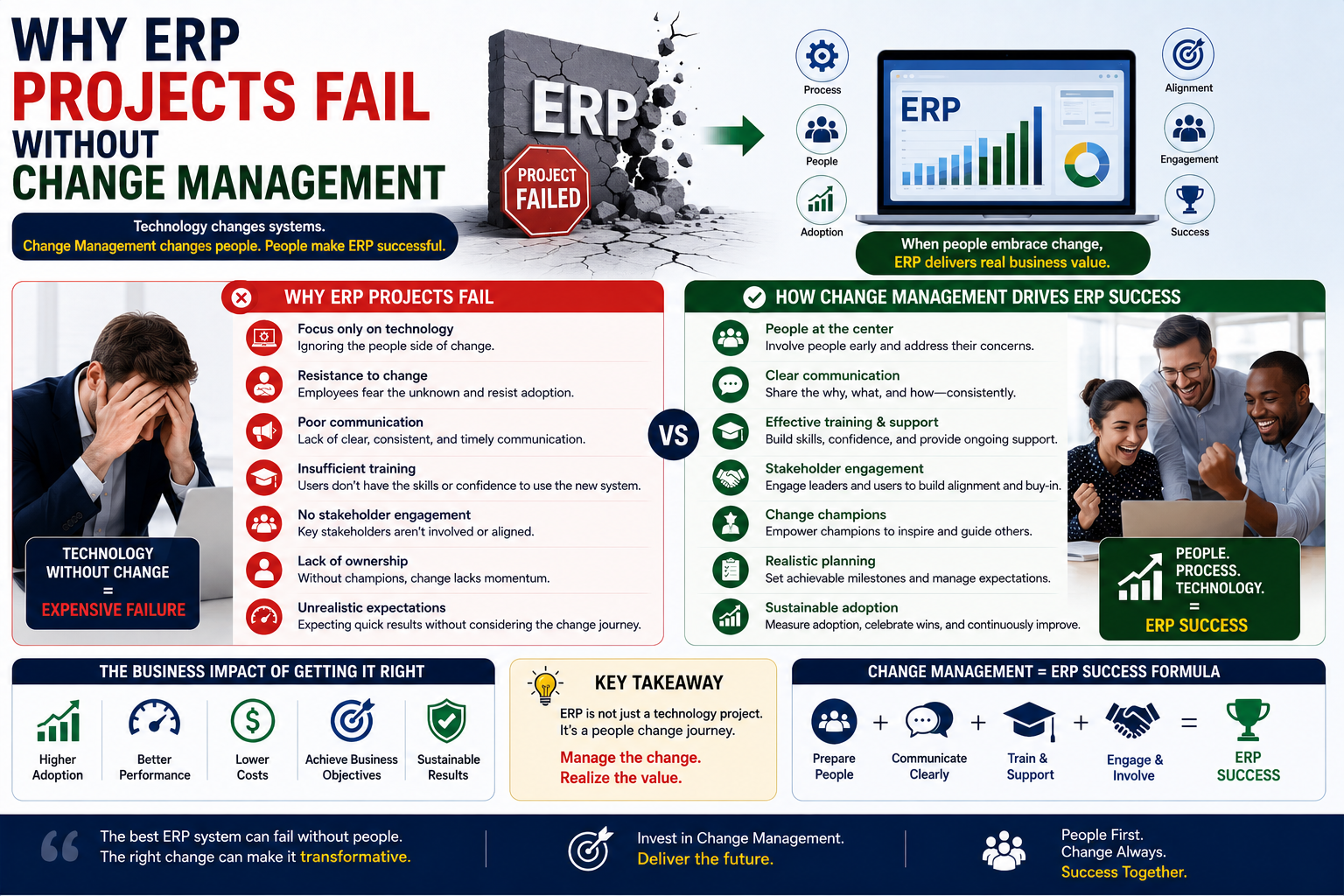
- Staff are trained on new screens but not on new processes or decision rights.
- Leaders sponsor the budget but don’t visibly sponsor the change.
- Resistance is treated as a training gap instead of a genuine business risk.
- Go-live is treated as the finish line instead of the start of adoption.
- Legacy workarounds and shadow systems persist because the “why” was never communicated.
Change management for ERP implementations exists specifically to close these gaps aligning people, process and leadership with the technical rollout timeline.
Change management for ERP implementations Across Vendors
While SAP, Oracle and Microsoft Dynamics differ technically, the change management discipline applied to each follows the same core logic: prepare, equip and support people through the transition. The differences show up in scale, culture and rollout style.
Change Management for SAP Implementations
SAP projects are typically large, multi-year programs affecting finance, supply chain and manufacturing simultaneously. Change management for SAP implementations usually needs:
- Early business-process mapping, since SAP often forces standardisation across previously inconsistent regional processes.
- A dedicated change network of “super users” in each business unit to support peers after go-live.
- Heavy investment in leadership alignment, because SAP rollouts commonly touch multiple departments and vendors at once.
- Staged hypercare support, since SAP’s complexity means adoption issues surface weeks after go-live, not just on day one.
Change Management for Oracle Implementations
Oracle Cloud ERP and Oracle Fusion projects are frequently paired with broader cloud-migration programs, so change management for Oracle implementations often needs to manage two changes at once new software and new infrastructure. Priorities typically include:
- Clear communication distinguishing “what changes for you” from “what changes for IT”, since Oracle migrations can blur the two in staff perception.
- Role-based training paths, as Oracle’s configurable dashboards mean different teams see very different interfaces.
- Data-migration transparency, because Oracle projects often surface historical data-quality issues that unsettle end users if not explained early.
Change Management for Microsoft Dynamics Implementations
Microsoft Dynamics 365 implementations are common in mid-sized Australian businesses and often move faster than SAP or Oracle programs. Change management for Microsoft Dynamics implementations typically emphasises:
- Fast, iterative communication cycles that match Dynamics’ shorter, phased rollout schedules.
- Familiarity-based adoption, leveraging staff’s existing comfort with the Microsoft 365 ecosystem to reduce resistance.
- Close coordination with Power BI and Power Platform rollouts, which are frequently implemented alongside Dynamics.
A Change Management Framework for ERP Projects
Most Australian change managers apply a recognised framework rather than building one from scratch. Two are especially common on ERP programs:
- ADKAR (Prosci) — Awareness, Desire, Knowledge, Ability, Reinforcement. Popular for its individual-level focus, useful when adoption resistance is the main risk.
- APMG Change Management (Foundation/Practitioner) a structured, organisation-wide model favoured in government and enterprise ERP programs across Australia.
If you’re deciding between the two, our earlier comparison of Prosci vs APMG certification breaks down which is more valued by Australian employers running ERP transformations.
The Role of a Change Manager on an ERP Project
On SAP, Oracle and Microsoft Dynamics programs, the change manager typically owns:
- Stakeholder analysis and a tailored communication plan for each impacted business unit.
- Training needs analysis aligned to new roles and processes, not just new screens.
- A resistance-management plan, including one-on-one conversations with high-impact sponsors and detractors.
- Readiness assessments before go-live, and adoption tracking (usage data, support tickets, survey feedback) after it.
- Reinforcement activities in the weeks following go-live, when the risk of reverting to old habits is highest.
Common Challenges Across SAP, Oracle and Microsoft Dynamics Rollouts
- Underestimating how many business processes change, not just the software.
- Change fatigue when ERP rollout overlaps with other transformation programs.
- Regional or state-based teams resisting standardisation the ERP forces on them.
- Executive sponsors who fund the project but disengage from visible, ongoing sponsorship.
- Underinvestment in post-go-live support once the project team is stood down.
Demand for ERP Change Managers Across Australian Cities
Change management for ERP implementations is in strong demand nationally, with some city-level variation in which platform dominates:
- Sydney — large financial-services and corporate SAP and Oracle programs; high demand for senior change managers.
- Melbourne — a mix of SAP, Oracle and Dynamics rollouts across retail, logistics and manufacturing.
- Brisbane — government and utilities favour SAP and Oracle, often requiring APMG-aligned change frameworks.
- Perth — mining and resources companies run large-scale SAP and Oracle ERP programs with long hypercare phases.
- Adelaide — defence and manufacturing sectors increasingly adopting Microsoft Dynamics alongside legacy systems.
- Canberra — government ERP consolidation projects with strict governance, often requiring APMG certification.
Skills and Certifications for ERP Change Managers
Employers hiring change managers for SAP, Oracle and Microsoft Dynamics projects consistently look for a mix of framework knowledge and platform exposure:
- A recognised change management certification (Prosci ADKAR or APMG Foundation/Practitioner).
- Experience running stakeholder workshops and readiness assessments on a live ERP program.
- Comfort working alongside project managers, business analysts and ERP functional consultants.
- Familiarity with the specific vendor ecosystem — SAP Activate, Oracle OUM, or Microsoft’s Success by Design methodology.
You can build these foundations with a structured, Australia-focused change management course covering both the ADKAR and APMG methodologies used across ERP programs.
These courses sit within the wider training portfolio at Logitrain, an Australian IT training provider with a track record of preparing candidates for real project and workplace scenarios.
Further Resources
These official vendor and industry resources are useful for deeper reference while you plan an ERP change program:
SAP — SAP Activate methodology overview
Oracle — Oracle Unified Method (OUM) overview
Microsoft — Success by Design for Dynamics 365
Frequently Asked Questions
Which change management framework is best for ERP implementations?
Both ADKAR and APMG are used successfully on ERP programs. ADKAR suits organisations focused on individual adoption, while APMG’s structured, organisation-wide model is favoured on large government or enterprise SAP and Oracle rollouts.
Is change management different for SAP versus Microsoft Dynamics?
The underlying discipline is the same, but SAP programs are typically larger and longer, needing sustained leadership alignment, while Dynamics rollouts move faster and lean on staff’s existing familiarity with Microsoft tools.
Do I need ERP experience to become a change manager on these projects?
It helps, but it isn’t mandatory. Many successful ERP change managers come from a generalist change background and build platform familiarity on the job, supported by a recognised change management certification.
Ready to Build ERP-Ready Change Management Skills?
Build job-ready change management skills for SAP, Oracle and Microsoft Dynamics projects with changemanagementcourses.au flexible training for professionals across Sydney, Melbourne, Brisbane, Perth, Adelaide and Canberra. Explore the full course catalogue at Logitrain.